The Cost of Delay: How Geopolitical Risk Is Driving Up Chip Prices
Let’s face it: semiconductors are not just foundational to tech—they are the tech. From smartphones to satellites, the global economy runs on silicon. But as the chip supply chain becomes increasingly entangled with geopolitics, the risk of delays and price volatility has never been higher. For manufacturers, OEMs, and supply chain leaders, ignoring this risk comes at a steep cost—not just in dollars, but in long-term competitiveness.
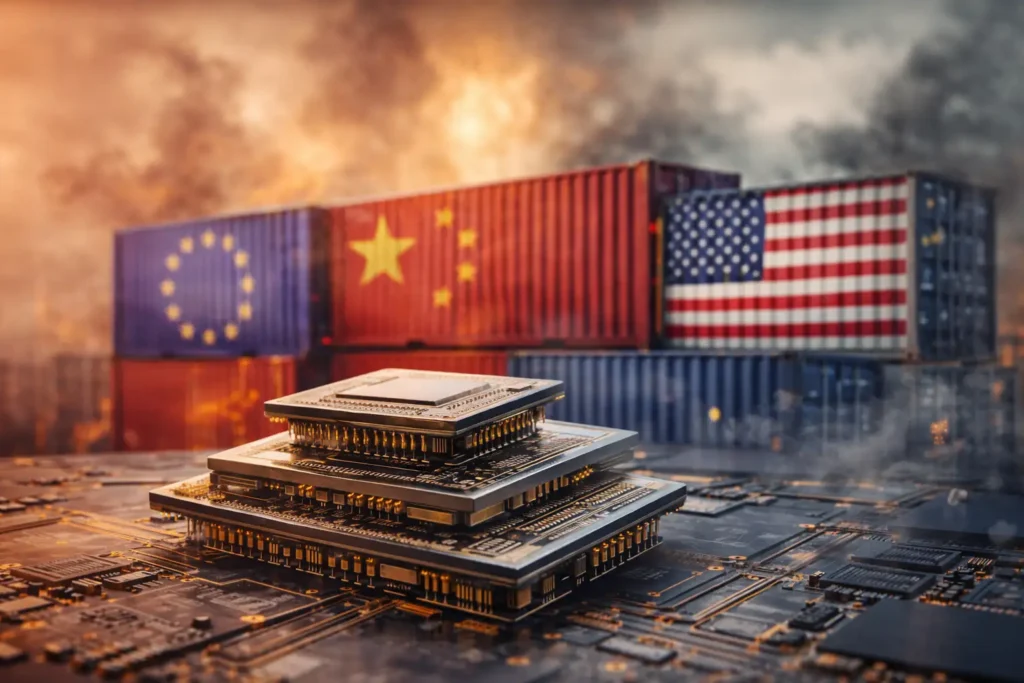
Its Politics Versus Silicon
The semiconductor supply chain has always been global, with design in the U.S., fabrication in Taiwan, assembly in Malaysia, and distribution around the world. But as relations between major powers like the U.S., China, and the EU become more fraught, this once fluid system is showing signs of fracture.
Export controls, tariffs, sanctions, and political instability can now stall shipments, restrict access to critical tools, or outright ban the sale of certain technologies. The result? Increased lead times, higher costs, and unpredictable supply.
The Ripple Effect of Delay
Missed Product Launches
With timelines pushed back, companies miss critical market windows.
Increased Holding Costs
Components sitting idle tie up working capital which only increases over time.
Customer Churn
If end products don’t ship, customers go elsewhere, often for good.
Stockpiling Behavior
To hedge against delays, firms overbuy and further tighten supply and prices.
It’s a vicious cycle: the fear of delays causes panic buying, which worsens the delays and inflates mutual costs.
Hidden Costs You Might Be Missing
- Lost Engineering Time: Teams waste hours searching for alternative components or reconfiguring designs.
- Brand Damage: Repeated delays erode customer trust and reputation.
- Strategic Paralysis: Uncertainty stalls innovation, product development, and investor confidence.
How to Build Resilience in a Volatile Market
Facing geopolitical uncertainty, companies must adopt a proactive strategy to reduce dependence on single geographies or suppliers.
Key tactics include:
Supplier Diversification
Don’t put all your chips in one basket. Establish alternative sources across different regions.
BOM Flexibility
Design products to accommodate multiple part numbers or vendors for critical components.
Inventory Intelligence
Design products to accommodate multiple part numbers or vendors for critical components.
Conclusion: Diversify and Ensure BOM Flexibility
Delays in the semiconductor world are no longer just a supply chain problem—they’re a strategic threat. In a world where every product is a tech product, and every product runs on chips, the ability to adapt quickly is the difference between leading the market and lagging behind the crowd.
How NetSight Helps You Beat Delay and Inflation
Accurate Component Substitution
Through our smart redesign and cross-referencing capabilities, we recommend alternative parts that match your needs—often with shorter lead times or lower geopolitical risk exposure.
Global Market Monitoring
NetSight One’s AI-backed tools scan real-time global demand, pricing shifts, and sourcing options, helping you act before the market does.
On-the-Ground Advantage
With employees in China and Hong Kong and partners in the U.S. and Europe, NetSight gives you insights from every critical region—ensuring you’re never flying blind.
Expert Engineers On Demand
Need help reengineering a design to accommodate a new chip? Our RF, cellular, and software engineers can guide the change, fast.
Article Written By: Nexfinity Global Team